Unlocking Innovation with 3d Printing Wings: The Future of Advanced Manufacturing
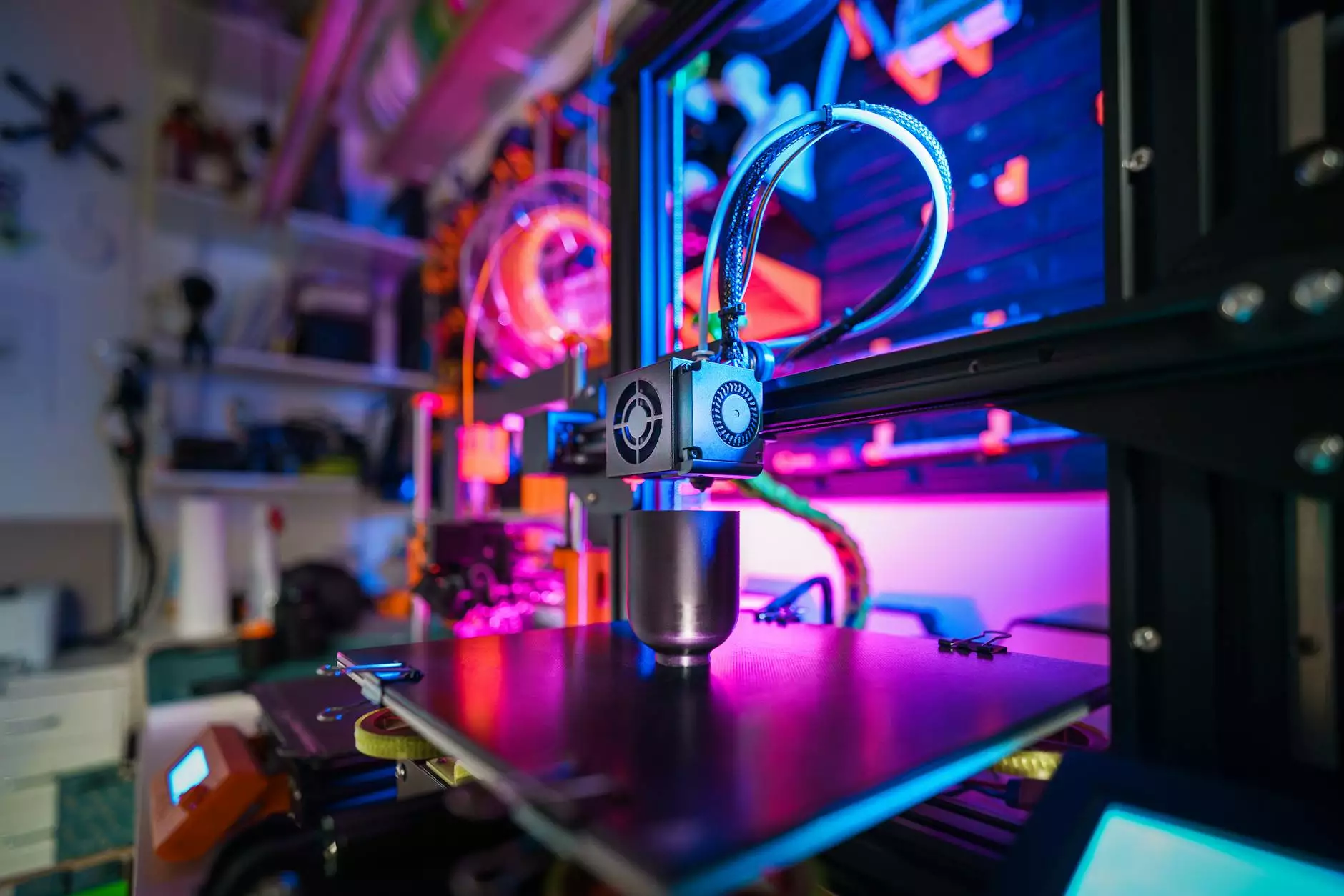
3D printing technology has revolutionized numerous industries by enabling the creation of complex, customized, and highly durable components with unprecedented precision and efficiency. Among the most exciting developments in this space is the advent of 3d printing wings, a groundbreaking innovation that is transforming the capabilities of aerospace, automotive, and industrial sectors worldwide.
Understanding 3d Printing Wings: A Paradigm Shift in Structural Design
The term 3d printing wings refers to the process of designing, engineering, and manufacturing wing structures using additive manufacturing techniques. Unlike traditional manufacturing methods, which often involve subtractive processes and multiple assembly steps, 3D printing wings enable the creation of intricate geometries, complex internal channels, and lightweight yet robust structures that were previously impossible or impractical to produce.
Key Benefits of 3d Printing Wings
- Weight Reduction: By enabling the production of optimized internal lattice structures, 3d printing wings significantly reduce weight, improving fuel efficiency for aircraft and vehicles.
- Design Flexibility: Complex geometries, morphing shapes, and customized features can be integrated directly into wing designs.
- Cost Efficiency: Reducing material waste and streamlining manufacturing processes lower overall production costs.
- Rapid Prototyping and Iteration: Accelerate the development cycle by quickly producing prototypes and testing new design concepts.
- Enhanced Performance: Incorporating innovative materials and design features enhances aerodynamic and structural performance.
Technologies Powering 3d Printing Wings
The successful manufacturing of 3d printing wings relies on advanced additive manufacturing techniques, including Selective Laser Sintering (SLS), Direct Metal Laser Sintering (DMLS), Electron Beam Melting (EBM), and Continuous Fiber Reinforcement processes. These technologies allow for the fabrication of complex metal and composite parts that meet rigorous aerospace standards.
Materials play a critical role in the performance of 3D printed wings as well. High-performance alloys such as titanium, aluminum, and Inconel are frequently used due to their excellent strength-to-weight ratios, corrosion resistance, and thermal stability. Additionally, composite materials infused with carbon fibers are gaining popularity for producing lighter yet more durable wing structures.
The Impact of 3d Printing Wings on Various Industries
Aerospace Industry
In aerospace, 3d printing wings signifies a leap forward in aircraft design and performance. Manufacturers are now able to produce wings that are not only lighter but also feature integrated cooling channels, optimized aerodynamic surfaces, and complex internal reinforcements, all with minimal assembly requirements. This results in significant savings on fuel and maintenance costs while enhancing safety and reliability.
Automotive and Motorsport Applications
The automotive sector benefits from 3d printing wings through the development of high-performance aerodynamic components, such as wing flaps and spoilers, that are lighter and more customizable. Motorsport teams utilize these advancements to fine-tune vehicle performance, gaining a competitive edge while reducing production lead times.
Industrial and Commercial Uses
Beyond aerospace and automotive fields, 3d printing wings are used in wind turbines, drones, and even large-scale structural applications where custom, lightweight, and durable wing structures are required. The ability to rapidly prototype and produce bespoke parts opens new horizons for innovation across multiple industrial domains.
The Design Process of 3d Printing Wings: From Concept to Reality
Developing 3d printing wings involves a detailed, multi-stage process that merges engineering expertise with cutting-edge manufacturing technology:
- Conceptual Design: Engineers utilize advanced CAD software to conceptualize innovative wing geometries, considering aerodynamics, material properties, and structural integrity.
- Topology Optimization: Specialized algorithms optimize internal structures for maximum strength and minimal weight, often resulting in complex lattice or cellular architectures.
- Material Selection: Appropriate materials are chosen based on the operational environment, desired properties, and manufacturing capabilities.
- Additive Manufacturing: Using high-precision 3D printers, the wing components are built layer by layer, adhering to strict quality standards.
- Post-Processing & Testing: After printing, parts undergo finishing, inspection, and rigorous testing to ensure compliance with safety and performance criteria.
- Implementation & Integration: Finalized wings are integrated into larger aircraft or structures, followed by field testing to validate real-world performance.
The Future of 3d Printing Wings: Innovations and Challenges
As technology advances, the potential for 3d printing wings continues to grow exponentially. Researchers are exploring new materials, multi-material printing, and even bio-inspired designs to push the boundaries of what's possible. The integration of artificial intelligence and machine learning further enhances design optimization, leading to smarter, more efficient wing structures.
However, several challenges remain, including scaling production for commercial aerospace, ensuring consistent quality and safety standards, and developing cost-effective solutions for large-scale manufacturing. Overcoming these hurdles will require continued collaboration between industry leaders, research institutions, and regulatory agencies.
Why Choose 3dprintwig.com for Your 3d Printing Wings Needs
At 3dprintwig.com, we are committed to delivering cutting-edge 3d printing wings solutions tailored to your specific needs. Our expertise in advanced additive manufacturing, extensive material options, and dedicated engineering support ensure that your project benefits from innovation, quality, and efficiency at every stage.
Whether you're in aerospace aiming for weight reduction and structural optimization, automotive seeking aerodynamic enhancements, or industrial sectors requiring bespoke wing components, our team is equipped to turn your vision into reality.
Partner with us to unlock the full potential of 3d printing wings. Together, we’ll shape the future of manufacturing — pushing the boundaries of design, performance, and sustainability.
Conclusion: Embracing the Future with 3d Printing Wings
The evolution of 3d printing wings marks a pivotal moment in the quest for lighter, stronger, and more efficient structural components. As technology continues to advance, the possibilities for innovative wing designs are virtually limitless, promising transformative impacts across aviation, automotive, and industrial fields.
Investing in 3d printing wings today not only provides competitive advantages through enhanced performance and cost savings but also positions your organization at the forefront of modern manufacturing excellence. Embrace the future of design and production with expert solutions from 3dprintwig.com.


